Paper timesheets have one big thing going for them: everyone already knows how to use them. No login, no training, no cost. For a small team, that's often enough. But as a workshop grows, the hidden costs of paper start to outweigh the convenience — and most workshops eventually switch. Here's the honest comparison.
The real problem with paper timesheets
It's not that paper is old-fashioned. It's that paper timesheets are inaccurate, and inaccurate time data poisons everything downstream.
- 1They're filled in from memory. A worker writing up their day at 4:55pm doesn't remember the 35 minutes spent waiting for steel or the 20 minutes of rework. They write down eight hours against Job 1234. Studies put paper time capture at 15–30% inaccurate.
- 2They lack detail. A single daily total against a job number doesn't tell you which task, which stage, or whether any of it was rework. That's exactly the detail you need to cost and quote jobs properly.
- 3They create admin. Someone has to collect, read, and re-key every sheet. On a 10-person floor that's hours of non-productive time every week — often done by someone whose time is expensive.
15–30%
Typical inaccuracy of paper-based time tracking
What digital time tracking changes
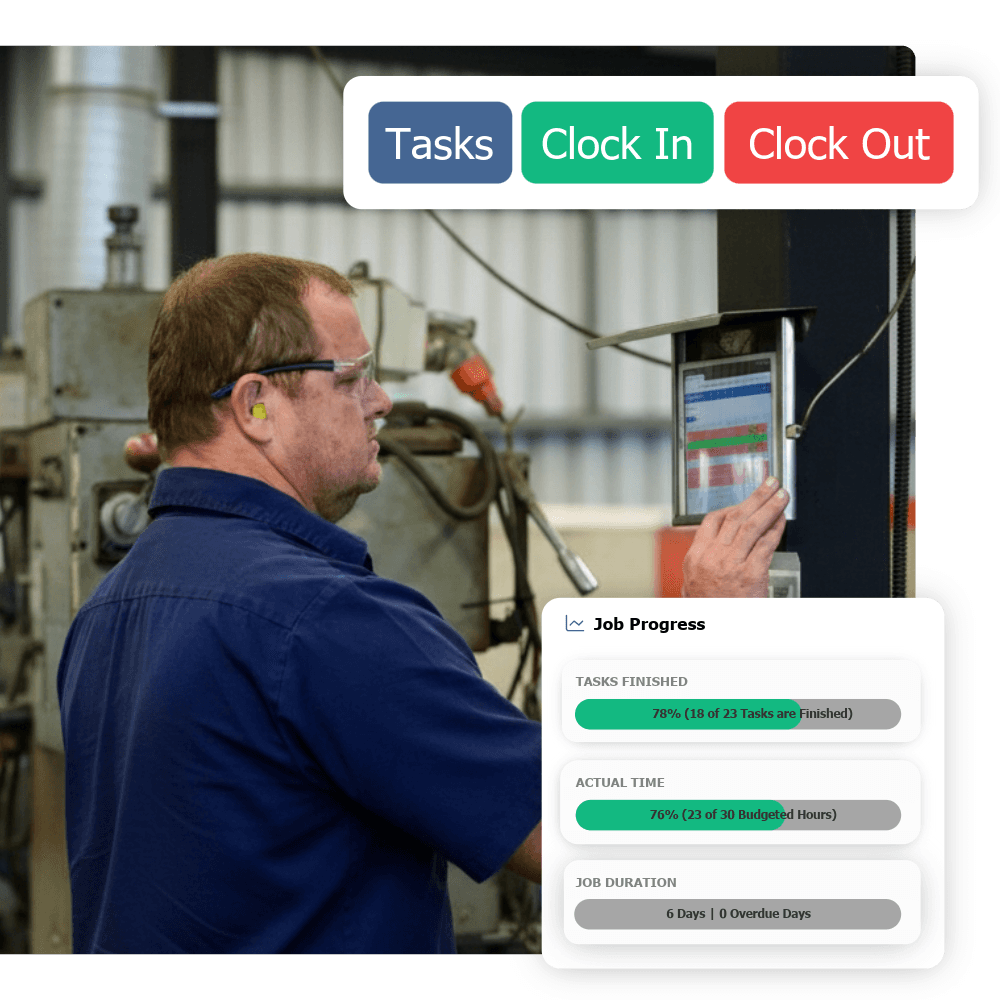
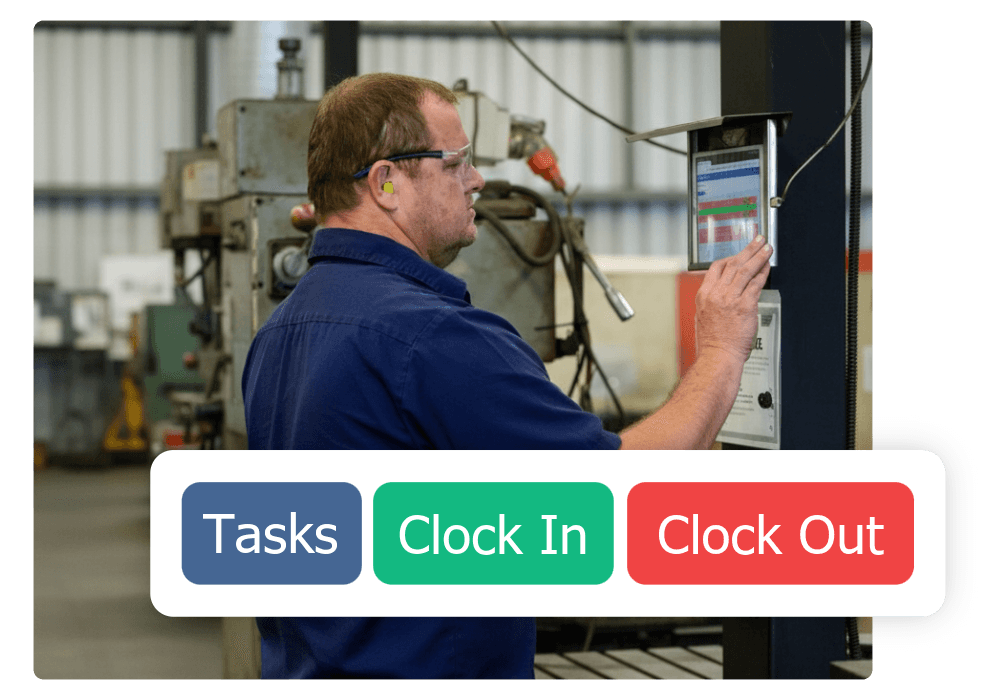
Digital time tracking captures time at the point of work. A worker clocks onto a specific job and task from a tablet, phone, or floor-mounted screen. When they switch jobs or take a break, they clock across. The data records itself — who, what job, what task, what time — automatically and accurately.
That single change gives you three things paper never could:
- Accurate per-job, per-task costs — the foundation of profitable quoting
- Real-time visibility — see what's being worked on right now, not at month-end
- Payroll-ready data — verified hours flow into Xero, MYOB, or QuickBooks without re-keying
Honest comparison
- Cost to start: Paper wins — it's free. Software is a subscription.
- Training: Paper wins — everyone knows it. Modern software takes a short ramp.
- Accuracy: Software wins, decisively — 15–30% error versus near-exact.
- Job costing detail: Software wins — task-level versus a single daily total.
- Admin overhead: Software wins — no collecting or re-keying.
- Payroll: Software wins — data flows straight through.
When it's worth switching
Paper is fine for a solo operator or a team of two or three on simple jobs. The switch usually pays off when:
- You're past 5 staff and the weekly timesheet admin is real
- You quote on labour and jobs keep running over
- You can't say what a job actually cost with confidence
- You're re-keying timesheet data into payroll or a spreadsheet by hand
The bottom line
Paper timesheets aren't free — they cost you accuracy, margin, and admin hours; the price is just hidden. For a small, simple operation that can be a fair trade. For a growing jobbing workshop, digital time tracking usually pays for itself on accurate quoting alone — before you count the admin you get back.
The cheapest timesheet system in the building is also the most expensive — you just can't see the bill.