Labour is between 40% and 60% of the cost of every job that leaves an Australian manufacturing workshop. For a joinery, it's higher. For an engineering shop with expensive materials, it's lower — but it's still the biggest controllable cost on the P&L.
If you're not tracking labour cost accurately against jobs, you're quoting on guesses — and the margin number you report to yourself and your accountant is a guess too. This post walks through why most Australian workshops still get this wrong, and what "doing it properly" actually looks like.
Why paper timesheets don't cut it any more
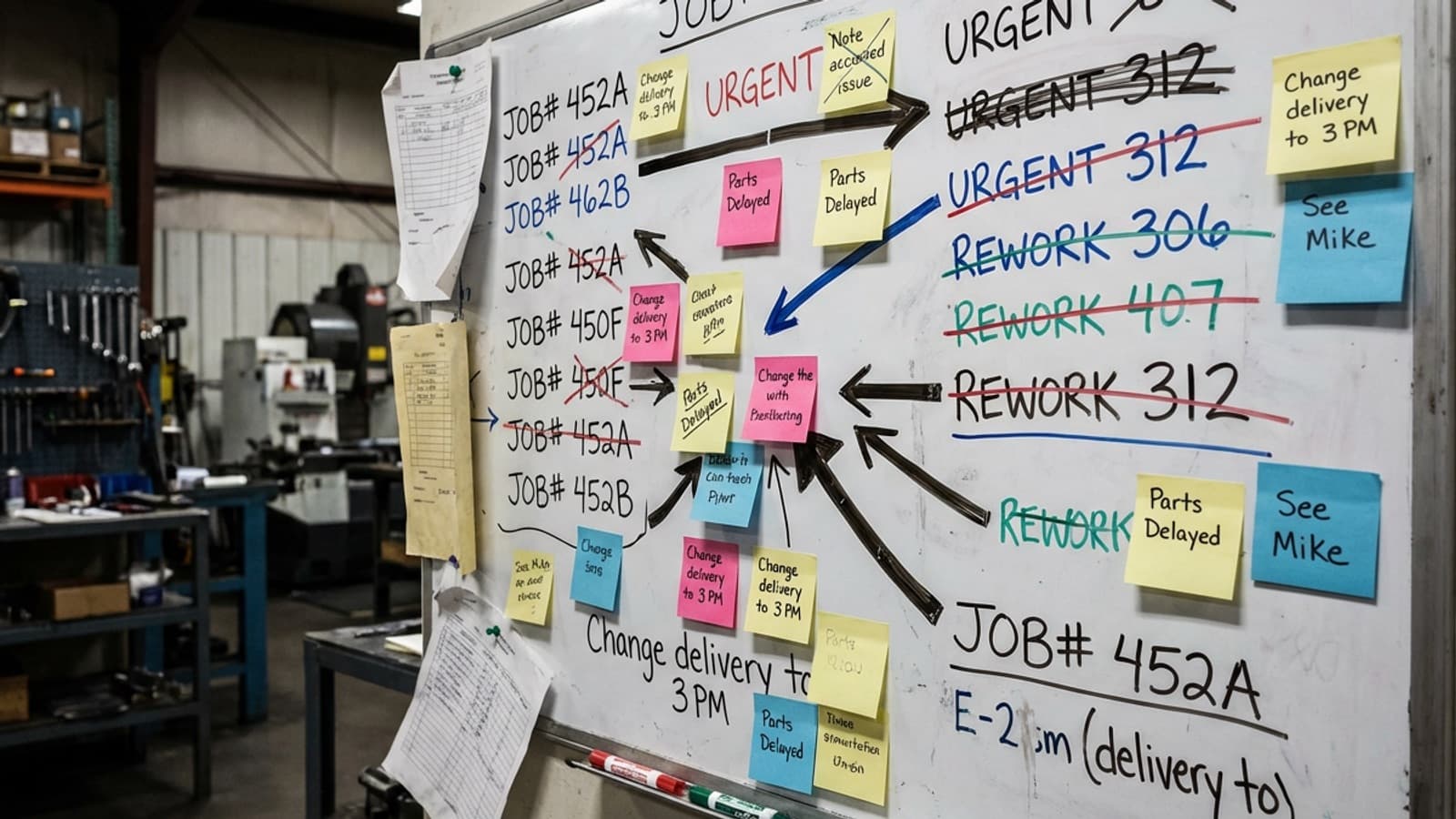
The classic Australian workshop time tracking workflow: a staff member fills in a paper timesheet at the end of the day (or reconstructs one Friday afternoon), ticks the jobs they worked on, estimates hours, drops it in a tray. The office keys it in, hopefully. The numbers match payroll, approximately.
Every step in that process loses data.
- Reconstruction error. Nobody remembers at 4:45pm Friday whether they spent 6 hours on Job A or 4 hours. They round. They guess.
- Job attribution error. Three jobs on the go, work switches between them all day, the timesheet shows one block of time on one job.
- Key-in error. The office re-types numbers from paper into MYOB or a spreadsheet. Transposition errors, missed rows, lost pages.
- Rework hidden inside normal hours. The 2 hours fixing a bad cut on a part from Job 4 gets booked against Job 4's normal budget — you never learn you've got a rework problem.
- Non-productive time invisible. Setup, cleanup, waiting on materials — all buried in "general" or booked against whatever job is nearby.
What "doing it properly" looks like
1. Capture at the bench, not from memory
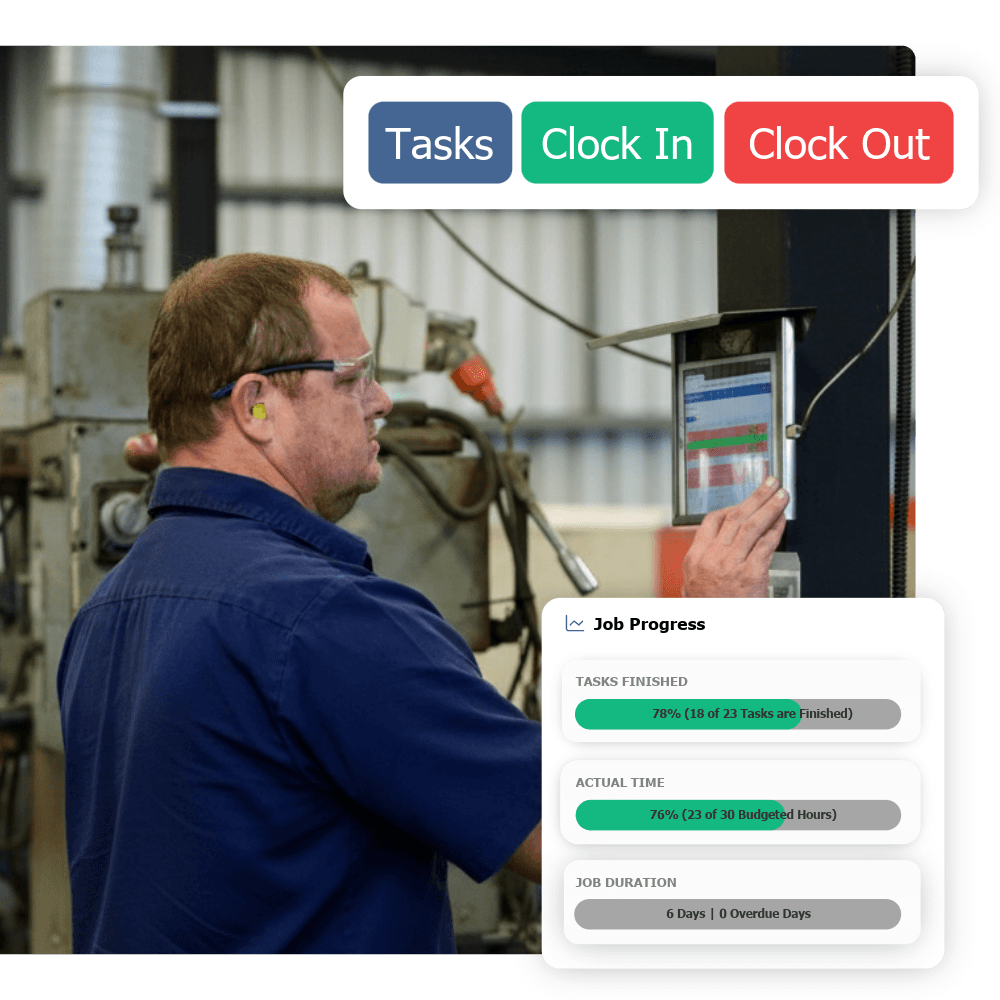
Staff clock onto jobs as they start them — via a touchscreen on the floor, a tablet at the workstation, or a biometric reader that logs who's on what and when. Every hour is attributed to the right job at the right production stage in real time.
2. Biometric for the stuff that matters
For workshops serious about labour cost accuracy, biometric clock-in (face recognition, fingerprint) solves the buddy-punching problem and gives you an auditable record of who was on what. Not every workshop needs it — but if you've ever had a payroll dispute, you know why it helps.
3. Live visibility to the office
Managers and estimators see live where labour is being spent. They catch a job running 40% over budget on Tuesday, not when the invoice goes out. They see which production stages consistently blow past quote hours.
4. Clean flow into MYOB / Xero
Verified timesheet data flows straight into MYOB AccountRight or Xero payroll without re-keying. The hours on the payroll run match the hours attributed to jobs. Reconciliation goes from a Friday afternoon panic to a non-event.
What accurate labour tracking actually changes
- Quotes get sharper. The hours you quote are based on hours you actually recorded on similar jobs, not on "what we charged last time, plus 10%."
- You spot bottlenecks earlier. Stage-level data shows exactly where jobs slow down — and which staff members are faster at which stages.
- Rework becomes visible. You can actually measure rework hours instead of absorbing them into general job time.
- Payroll runs clean. Reconciliation of timesheet hours to payroll hours goes from a weekly panic to a non-event.
- Margin becomes a known number. Not a guess, not a hope — a number you can defend when you sit down with your accountant.
A working example: Duralloy Truck Bodies, QLD
Duralloy build truck bodies for Queensland fleets. Empower on workshop touchscreens replaced manual time sheets and cut ~20% of the labour time out of every job, with live tablet data replacing end-of-day reporting. See the Duralloy story.
The bottom line
If labour is 40-60% of your cost and 15-25% of your labour data is wrong, you're running your workshop on numbers that are off by 7-15%. That's the entire margin on a typical job. Fixing it is the single highest-return project most Australian workshops have on the table.
Empower's time tracking runs across 250+ workshops in NZ and Australia, including 16+ Aussie workshops from NSW to WA. Read more about how Empower fits Australian workshops, or see the time tracking module.